|
|
| Chinese
Recipes |
Sic Juk, Jook, Congee or Rice Porridge |
|
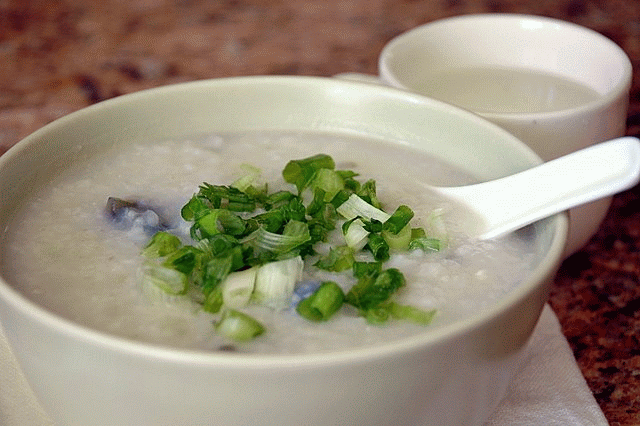
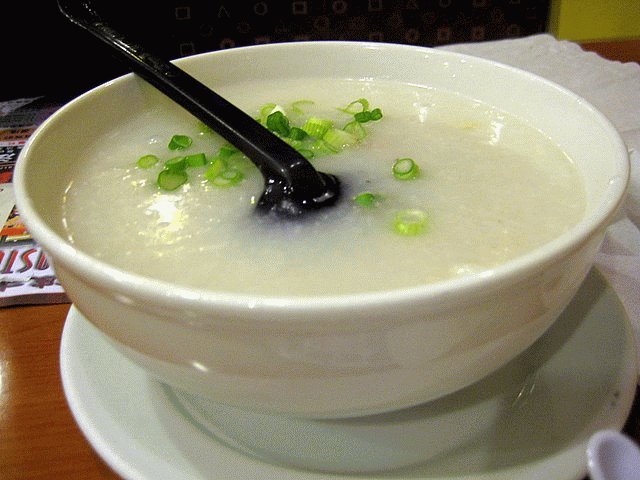
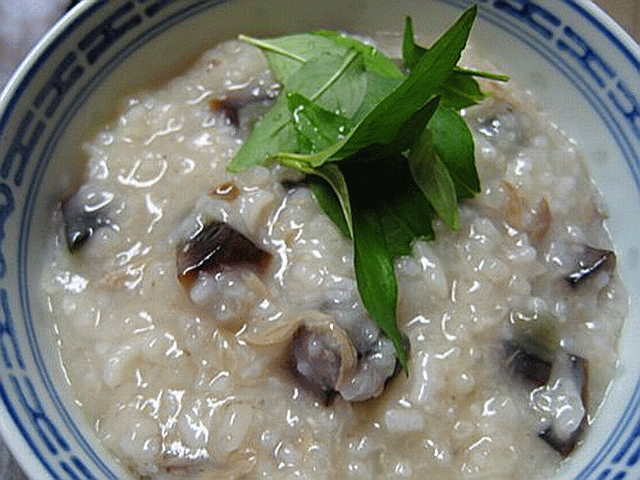
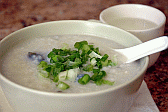
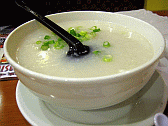
Rice porridge is a favourite Cantonese food which is called Sic Juk in Mainland Cantonese, and Jook in Hong Kong. Congee is a universal name for this breakfast dish, but can also refer to noodle congee. Due to liberal Anglicisation,
it is also written as Jook, Juke, and Chuk. As all of Guangdong and Guangxi Provinces call it Sic Juk, this is what we will use.
Sic Juk is often served at breakfast, but can be eaten at any time of day or night. It is also a comfort food and given to people who are unwell. Eating it is also a very good way to ward off a hangover after a heavy night on the
beer!
Restaurants will cook the basic porridge in 10 gallon pots, adding other ingredients a few minutes before serving. No matter how much or little you want to make, the basic formula is 1 bowl of rice to 4 bowls of water.
|
|
| |
|
Basic Method - Original
1. Wash the rice well and add to a saucepan or bowl. Cover well with water and leave to soak overnight.
2. Rinse the rice and add to the
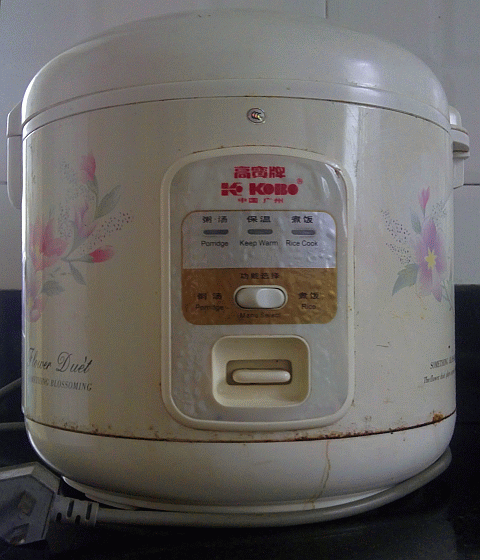
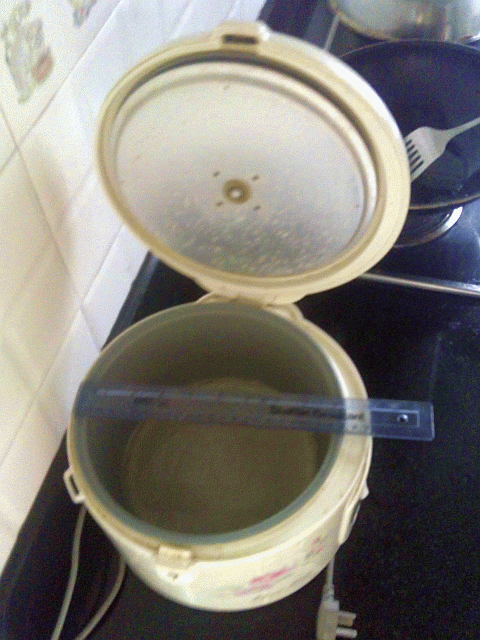
cooking pot. This can be a saucepan, rice cooker set to porridge, slow cooker, or ceramic soup pot. I prefer a saucepan. Add 4 times the water to amount of rice and bring to the boil. Set to simmer and leave to cook for 90 minutes,
stirring occasionally. Add more hot water if it starts to get a bit too thick.
Note: This is just rice and water, nothing else, not even salt.
3. After 90 minutes cooking the rice will
have started to break down, releasing its starches into the water. The colour of the water will have become milky, and the consistency should be that of single cream (Not too thick, not too thin).
4. Many
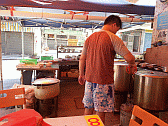
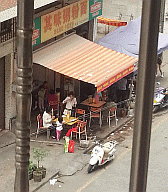
Chinese would now serve this in bowls to table, but this is where Cantonese begin cooking! Believe me when I tell you that this basic porridge is one of the most tasteless things I have ever endured eating. However, by total contrast
the version I used to eat at the Gaogong island canteen rates as one of my Top Ten Chinese dishes!
|
 |
| |
|
5. A restaurant will take enough base mixture from the large vat to completely fill a double-size bowl (About 1 pint). This is put into a smaller saucepan and brought to the boil. Other ingredients are then thrown
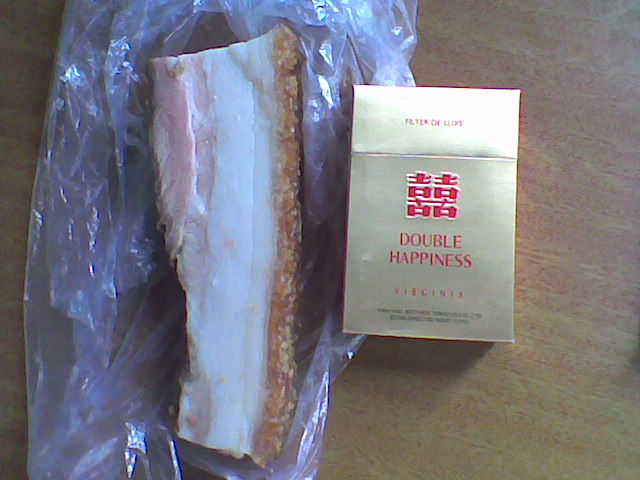
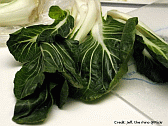
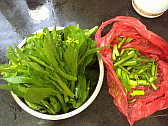
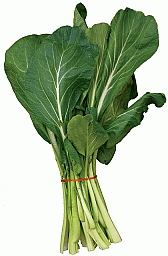
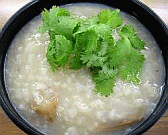
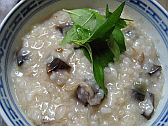
raw into the pot to your preference. My order was: Chinese pork strips (Like thin gammon, or bacon pieces called 'juk'), half a 1, 000 year old egg (pei dan), and a few small cabbage / mustard leaves (choi). This is boiled for a couple
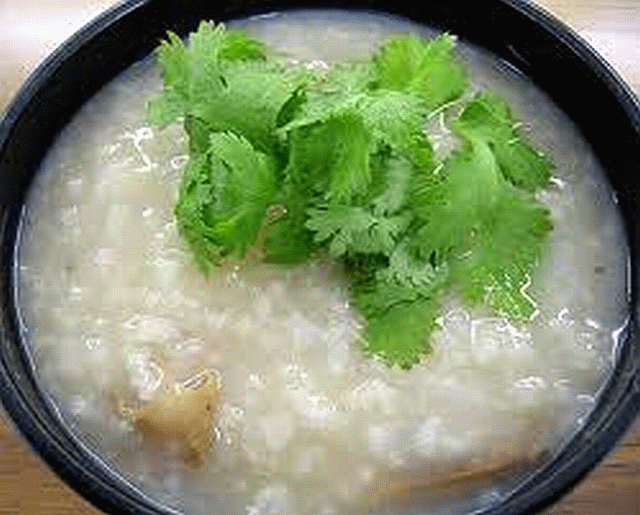
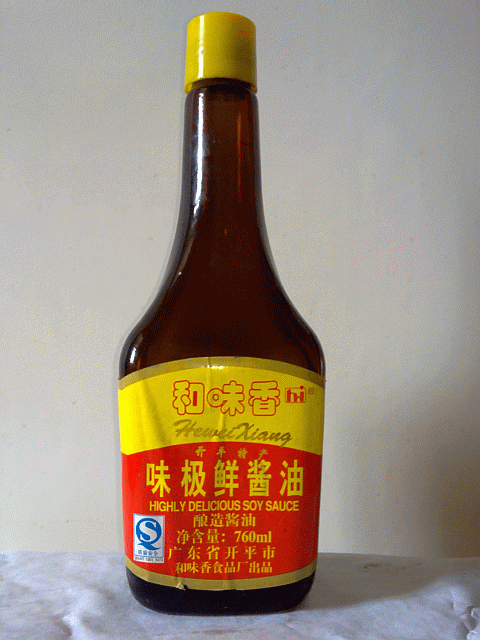
of minutes, or until the bacon is cooked, and served to table. This is accompanied by a small bowl of soy sauce with: finely diced fresh ginger strips, chopped spring onions (Scallions), and diced fresh coriander leaves.
|
 |
Warning!
Sic Juk retains heat due to the high glutinous content of the sauce / water. Therefore upon its arrival at table I used to stir the side dish so it marinades, light a cigarette, and finish smoking before beginning to eat, even on
the coldest of mornings.
To eat, take the side dish and drizzle a little of the contents and soy over the porridge - but not too much. This contains the flavour's I like, and replaces the salt and pepper I would have added if served alone. |
| |
|
Quick Method
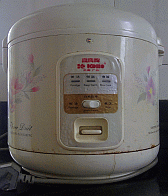
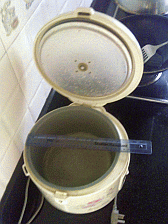
Most people can't be bothered to spend hours cooking this dish, although all restaurants do. The quick way is to wash the rice and add 4 times the liquid to a saucepan or rice cooker set to porridge. Cook for 30 minutes on a playful
simmer, stirring occasionally and adding extra hot water as required. The water will be starting to cloud into a milky constituency, and the longer you leave it the better. |
 |
| |
|
However, 30 minutes is about minimum time before you can serve, or add the extra ingredients as detailed above, and options as described below.
Optional Basic Ingredients
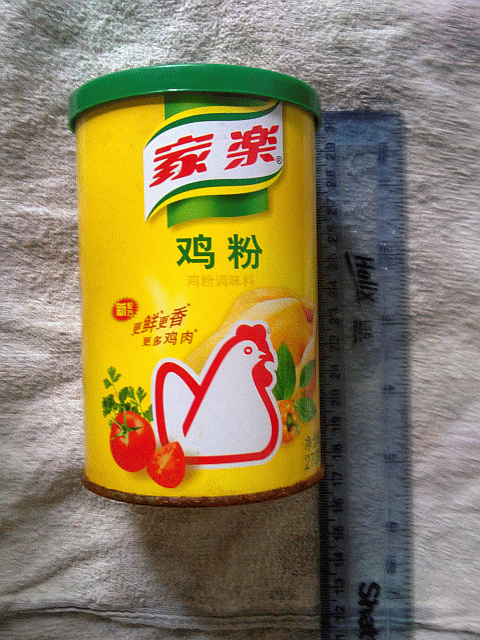
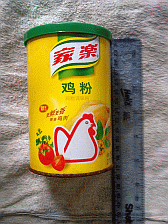
To the base rice and water mix, Chinese would add one or two teaspoons of chicken bouillon, and stir in until thoroughly mixed. Western kitchens and palates may prefer vegetable or chicken stock. In UK this would be stock cubes, whilst
in USA this would be a can - adjusting water appropriately.
One of the options we detail below is a fish version, and if this is what you are cooking then consider adding a little fish stock - but be careful not to add too much as this is usually quite strong. |
| |
|
Serving Suggestions
Recipe 1
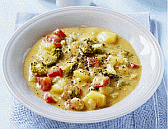
This recipe is given above, with options below. This would represent a pretty standard Sic Juk.
Recipe 2
This is very simple, and is a basic Sic Juk served to table with a side dish of pickled things - which would normally include pickled: leeks (onions), melon, carrots. It is a standard Cantonese dish. |
 |
| |
|
Recipe 3
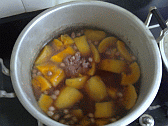
This is a medicinal variation primarily for girls. Add some bones that have a little meat on them to the cooking 30 minutes or more before serving. Pork is fine, or lamb etc. Chinese would chop up a neck vertebrae, but you could substitute
one pork rib in the west. Most native Chinese girls would prefer "chicken's feet" instead by the way.
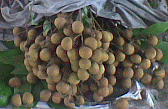
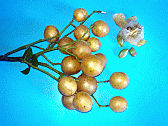
The meat pieces should be between half and 3/4 inch long. Add some red dates (Substitute: rose hips) and 3 or 4 longgnun per portion (Substitute: small, ripe, peeled and stoned Lychee).
|
| |
|
Optional Ingredients
A Standard Sic Juk would also include wafer thin slices of white fish. These would be pond reared carp in China, so full of sharp little bones = no thank you! Now, adding a few flakes of haddock from last nights fish and chips would
be ideal; as would anything similar.
|
| |
|
Seafood such as crabmeat or cockles goes extremely well with the mix, as does the meat from a crayfish. Prawns have too strong a flavour to mix with any other meat such as bacon; but are fine on their own. Nb. Crabmeat works with
the pork, prawns do not.
1, 000 year old eggs are common throughout Asia, and are traditionally made by burying chicken's eggs in the soil for 3-months or so, in order to preserve them. Nowadays they are produced quickly in factories.
They appear to have a black shell in wet markets, and the insides are completely gelatinised - and extremely tasty! They work very well with this dish, so don't let the name put you off before you try them. |
 |
| |
|
| You could vary the ingredients indefinitely and to suit your own persuasions. However, this dish is normally completed with a little cabbage, such as the mustard genus leaves of Cheung Choi. In the west you could try
spinach leaves cut into quarters, but only cook for 1-minute. |
| |
|
Dip
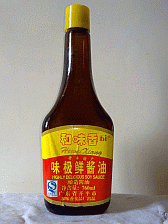
The standard dip is as given above: Soy Sauce (Light), diced ginger strips, finely chopped spring onions (Scallions), and chopped fresh coriander leaves. Marinade for a few minutes.
Mustard and Cress is ideal to add to the dip, or use as a garnish. Works perfectly.
Watercress also works well, but replaces the coriander - as Chinese coriander leaves are very strong by UK standards. Only use a little watercress and dice well. Marinade and enjoy something unique.
For a hotter experience, add a little diced fresh chilli to the dip.
If you want to eat garlic for breakfast, then add diced garlic to the dip, or a few whole cloves to the mix a few minutes before serving. I would not normally do this.
I consider the best Sic Juk to be made in the community that surrounds the small town of Gaogong (几 江or Jiu Jiang in Mandarin), which is on the western edge of Namhoi County (Nanhai ) flanking the West Pearl River, Foshan City, Guangdong
Province.
In Foshan City proper the thin gammon is replaced by pork bones and gristle. In Shunde County they use pork bones only, whilst in Toisan it has a different and thinner consistency. |
 |
|
|
|
This information is as supplied by ourselves, and ably
supported by our friends and various internet portals. |
|
|